Social Media
WritingLately I’ve seen a lot of young people quit instagram. Some of them are completely of the app, some of them are only allowing themselves to look at the site using their browser. When asking them why they are moving away from instagram, they all have the same answer: I’m spending way too much time on it and it’s not helping me in any way.
I, myself have a similar relationship with the image sharing app, I’ve had stints were I was of the platform completely, followed by months of intense use again. At this current moment I’m off again, peaking once or twice a week at the web app which I stripped down a lot using Antigram a Chrome Extension (hiding the discover and reels page - I do the same with YouTube using the Unhook Chrome Extension*.*). In addition, I make sure I always log out when leaving the website so the effort to go for a dopamine hit remains somewhat bigger. Taking it a step further by disabling my account only happened a handful of times in the 10+ years of my on-again, off-again relationship, while removing my account completely never happend.
[[Screenshot 2025-09-03 at 14.39.06.png]]
Stripped down version of the Instagram Web App.
So where does this seemingly general move-away from instagram come from? It’s clear that there is a general awareness of the negative feelings social media causes. Terminology like brain rot videos and doomscrolling both make this clear. Was the introduction of reels the last drop? Even though people feel don’t feel good using these apps regularly there still isn’t clear research that shows the results of this use. Last month research from the University of Ghent finds insufficient scientific evidence that social media harm teenagers’ mental health.
UGent research: https://www.nature.com/articles/s41598-025-90984-3
https://www.vrt.be/vrtnws/nl/2025/08/05/onderzoek-ugent-geen-bewijs-negatief-effect-sociale-mediagebruik/
And this is were it gets tricky. Finding correlation between social media usage and the effects on the mental wellbeing of humans is difficult. Firstly, there hasn’t passed enough time to see how this new technology is affecting people in the long run. Sure instagram has been around from 2010, but people that grew up with instagram from early childhood are only know becoming teens and young adults. In addition Instagram 10-years ago is a whole different platform than today. Fundamentally, it’s still about sharing pictures and videos with friends and reacting to it, the introduction of Reels, Stories, Messages and a Shop makes it a drastic different platform. This in addition to the change in quantity and quality of the content as well as the nature of the content. All new factors that again will need to be tested over a long time if you want to see its effects on the upbringing of kids. Secondly, social media is only one aspect of the education of the child, during the decades between being born and becoming an adult a lot of other factors are in play, linking effect and cause is almost impossible.
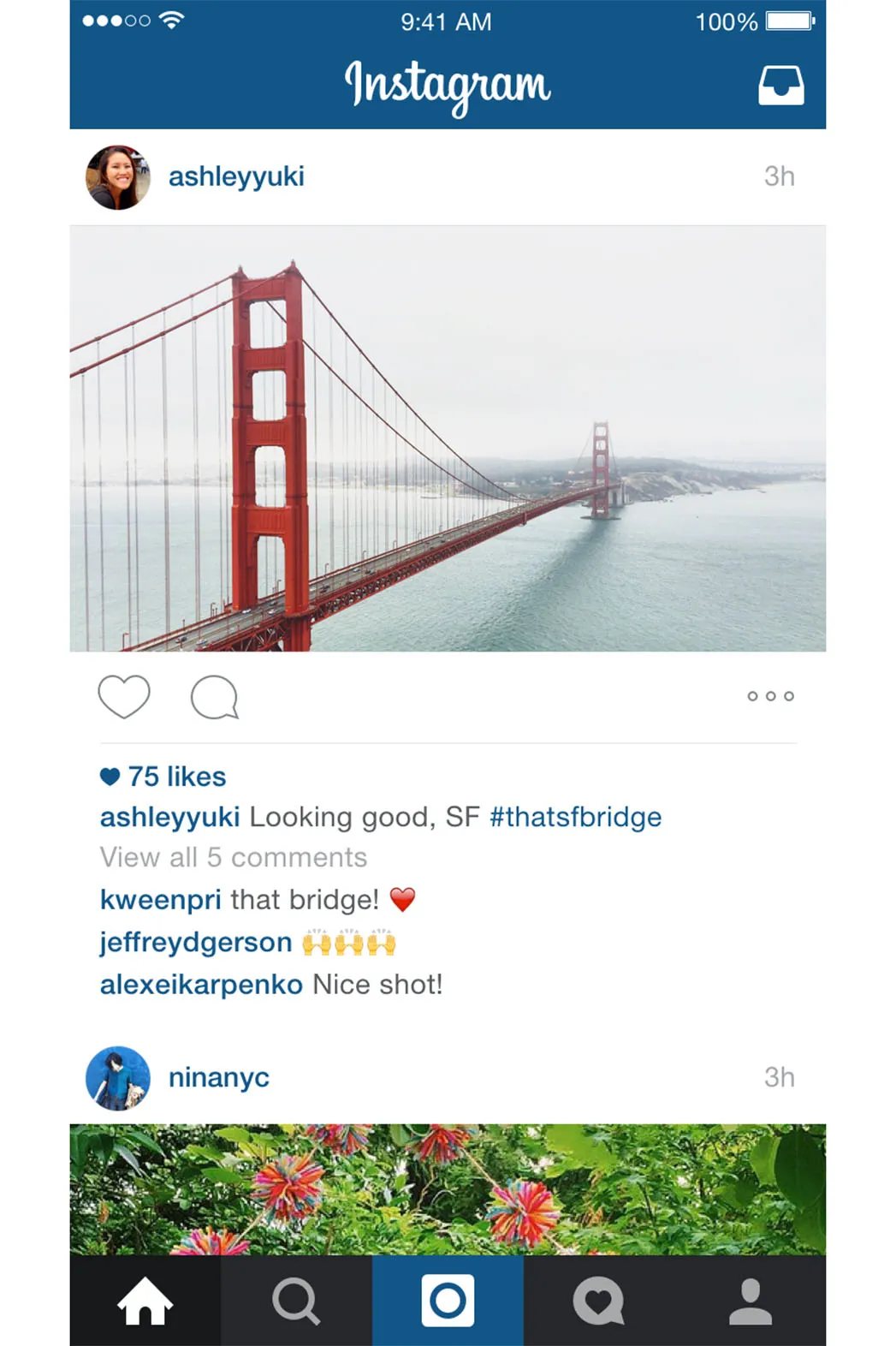 Instagram feed in 2015
[[Reels_IOSX_3.png.webp]]
Instagram feed in 2025
So if there is no clear evidence that social media harms, why are young people moving away from the platforms? Are they agreeing to a general subjective-consensus that it doesn’t do well for you and are they also feeling this themselves or are they Are young people feeling bad about using social media because they know it’s bad for you and want to
Social media platforms are rapidly innovating, are having more reach in the world and are getting users to spend more and more time on them. It went from not existing to becoming a drastic part of peoples lives. As mentioned above, it’s uncertain what the effects of this will be to humans and society. However what is certain is that these are all designed for a single purpose: generating money by grabbing the attention of users for as long as possible. As products are now being used by billions of people for multiple hours a day, potentially influencing the psychology, upbringing and well being of humans as well as the politics and social climate, it’s clear that people designing and building these products have huge responsibilities. As I’m a digital product designer myself, I feel a great responsibility to do things right and make sure the products I build have a positive effect on everything it touches. If and how this will happen is (like I discussed before) impossible to predict, however I do think that it’s much easier to achieve when putting the wellbeing of humans central instead of the money of humans. Sure we could expect government institutions to regulate this. It’s also there responsibility in this capitalist society to make sure there is a balance between economic growth and human well being. But I hope that there also is a sense of responsibility and movement from within the industry and venture capital to consider the future of humankind. And just maybe users themselves will have a certain awareness that will force platforms to change their course. Innovation happens steps by step and I hope social media platforms will take steps in the right direction. There is a lot of positive effects social design and the human psychology it rests on can cause, take a look at Strava. The app is built to record your activities and share it amongst friends. You feel motivated to run every week as you don’t want to be seen as lazy. Duolingo is similar, in addition to Duo nagging and smart gamification there is some kind of pressure to keep learning and earning XP. You can see a feed of all the achievements friends get and you can compare yourself with them directly when visiting their profile. the is there responsibility as well) , you have a great respoWhen you design products for the benefit of earning money instead of the wellbeing of the user, you create app like instagram and tik tok, you have huge impact on society and the future of the humankind. These apps are the peak example of the attention economy. Why can’t we do it differently?
Habit tracker - how I developed the proof of concept using AI (cursor / Claude) + react and supabase. How I made the UI and how I came to the concept.